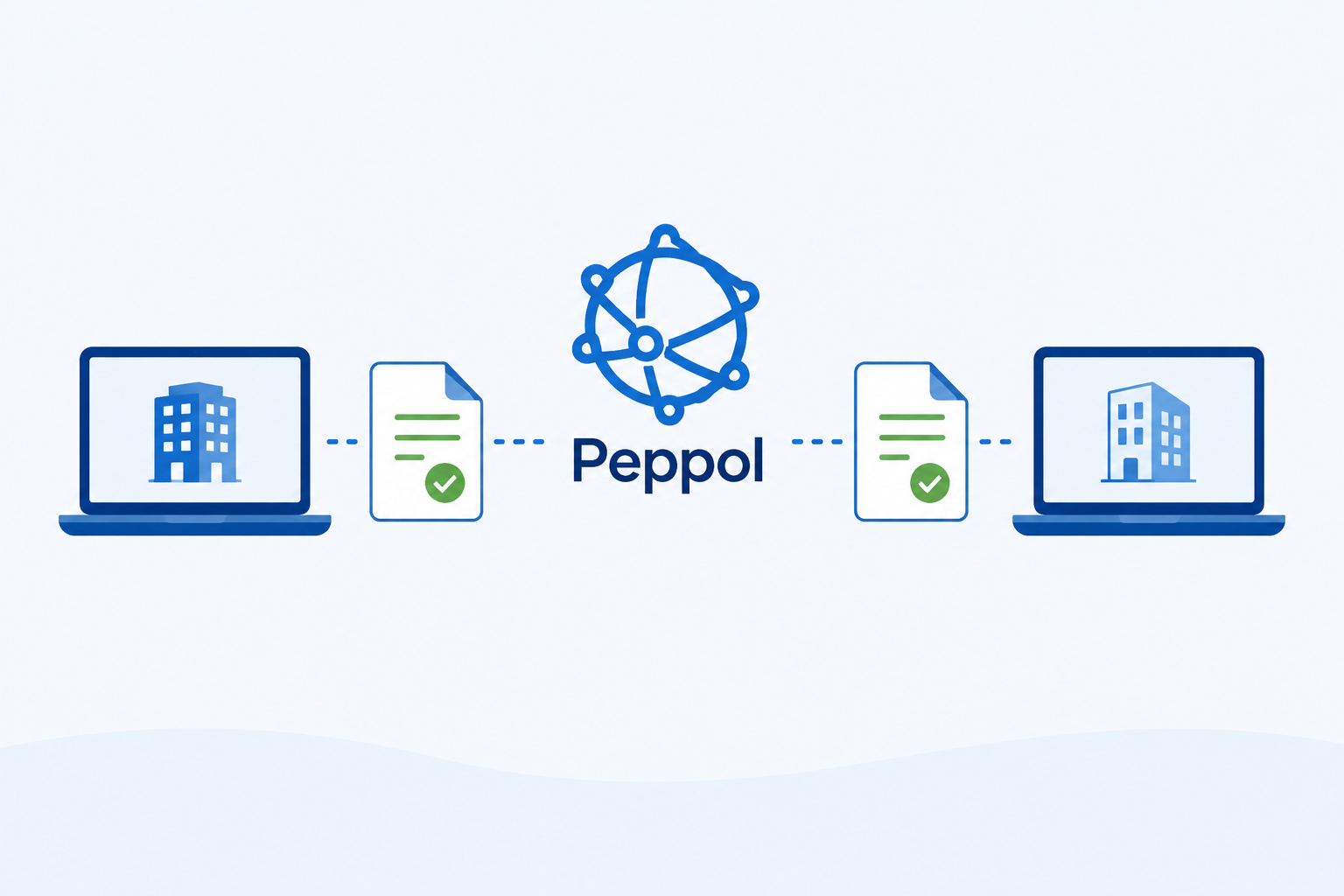
Peppol is often described as a network for sending invoices. In reality, it is a well-designed technical infrastructure that allows systems from different companies to communicate with each other, regardless of country or software.
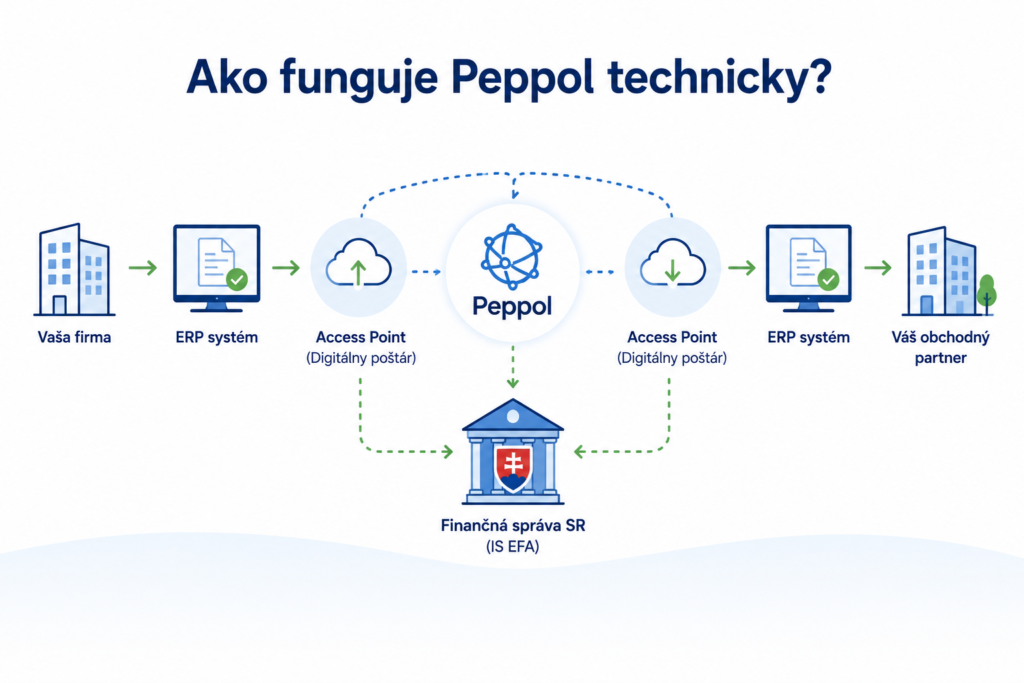
The foundation of Peppol is the 4-corner model. In this model, companies do not communicate directly with each other. Each company is connected to its own provider, known as an Access Point, which handles both sending and receiving documents.
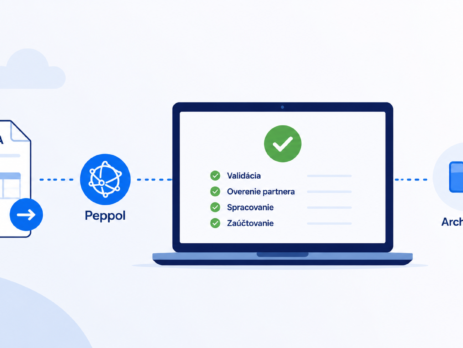
In practice, the process is simple. A company creates an invoice in its ERP system and sends it to its Access Point. The Access Point checks the document, identifies the recipient through the Peppol directory, and then delivers the invoice to the Access Point of the receiving party. From there, the invoice goes directly into the recipient’s system. The whole process happens automatically, without manual work.
Standardised data instead of PDF files
Standardisation is a key part of Peppol. Invoices are not sent as PDFs, but as structured XML documents based on the EN 16931 standard, most commonly in the Peppol BIS format.
Before the invoice is sent, the document is validated. This significantly reduces the number of errors, because the system checks whether the required data is present and whether the invoice follows the correct structure.
From the 4-corner model to the Slovak 5-corner model
In Slovakia, this model is being extended with an additional element, creating the so-called 5-corner model. The Financial Administration also becomes part of the process. This means the invoice is not only sent to the business partner, but also to the state.
After the invoice is created and sent to the Access Point, which in Slovakia is referred to as the Digital Postman, the document is also sent to the system of the Financial Administration. Only after that does it continue to the recipient.
Throughout the process, status messages are created about delivery and processing.
This approach improves VAT control and increases transparency. At the same time, it also places higher demands on integration. Companies need to ensure the correct data format, proper partner identification and connection to the service provider.
Modern solutions make these steps much easier. They can automatically transform data into XML format, validate documents, and manage communication with both the Peppol network and state systems.
What should companies check now?
For businesses, the most important thing is not to leave this change until the last minute.
We recommend analysing your existing systems already today and checking whether they can export invoices, and in which format. If this functionality is missing, it is worth contacting your system provider and checking the available upgrade options.
Another option is to consider a solution that already supports e-invoicing and standards such as Peppol.
It is also useful to use the time before the mandate to choose the right partner. This may be a Digital Postman in Slovakia or a provider that is already accredited, or currently in the accreditation process. Choosing the right partner early will make implementation much easier.
The list of providers is available on the website of the Slovak Financial Administration.
What changes for companies with modern systems?
For companies that already use high-quality and modern systems, the final process may not change dramatically. The workflow can remain very similar.
The main difference will be the quality of data. Invoice data will become more accurate, more consistent and ready for automated processing without manual input.
Summary
Peppol is evolving from a communication network into regulated digital infrastructure.
The Slovak 5-corner model is part of a wider European trend where the state plays a more active role in electronic invoice processing. Companies that prepare in time will gain an advantage and avoid unnecessary pressure just before the new obligations take effect.
What is Peppol? The digital revolution in invoicing
What happens on the recipient side in the Peppol network?