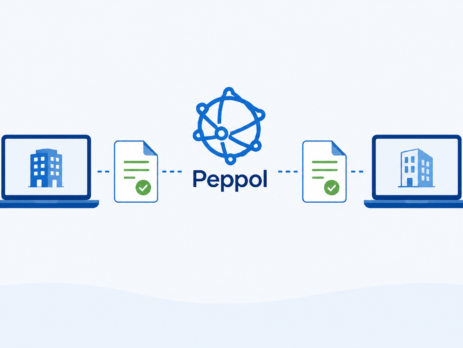

What Happens on the Recipient’s Side of the Peppol Network?
In previous articles, we explained the basic principles of the Peppol network, how a digital postman works, and how an invoice travels from a supplier through an Access Point into the Peppol network. Today, we will look at the final part of the process, known as Corner 4 or C4.
C4 represents the invoice recipient’s system. This may be an ERP system, accounting software, an approval workflow, an archiving system, or a company’s internal accounting solution. From a company’s perspective, this is often the most important part of the entire process because it determines how efficiently the company can handle electronic invoices.
When companies think about e-invoicing, many imagine only the transmission of an XML document. The reality is much broader. The greatest value of digitalization is created on the recipient’s side. If a company can process a received invoice automatically, without manual intervention, this is where the greatest savings in time and costs can be achieved.
What Happens After an Invoice Is Delivered?
When an invoice is delivered through the Peppol network, the digital postman or Access Point passes it to the recipient’s system. However, the process does not end there. On the contrary, this is where the most important part of the automation begins.
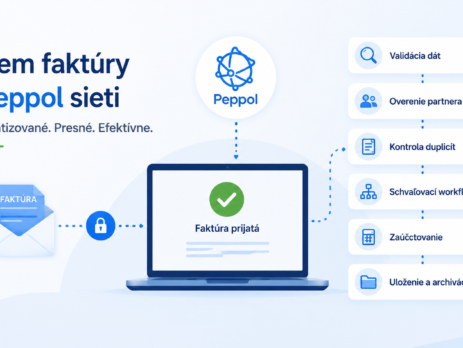
After receiving an invoice, modern systems can automatically perform several steps. First, the invoice is validated by checking the accuracy of the data, mandatory fields, and compliance with the defined format. The system can then automatically verify the business partner, check the VAT number, identify the purchase order, or compare the data with existing records.
Duplicate invoice detection is another very important function. The system can recognize that an invoice has already been received or processed, reducing the risk of errors or duplicate posting.
Following successful validation, the invoice can be posted automatically to the ERP system or sent into an approval workflow. It can be assigned automatically to a specific department, project, or approver. Once approved, the document is stored in an electronic archive and prepared for further reporting.
In practice, this means the company no longer has to copy data manually from PDF invoices or check basic errors by hand.
XML Is Not Designed for People
It is important to understand that Peppol BIS XML is not a document primarily designed for people to read. It contains structured data intended for systems.
A traditional PDF invoice is suitable for visual presentation, but a system must first “read” the data from it. This is why many companies currently use OCR or AI technologies to recognize data in documents.
With an XML invoice, this problem disappears. All data is stored in a precisely defined structure. The ERP system therefore knows exactly where to find the supplier, amount, VAT, purchase order number, and individual line items.
A modern ERP system can therefore:
- automatically identify the supplier
- identify invoice line items
- recognize VAT rates
- post the document
- prepare it for approval
- send it to the archive
All of this can be done without manual user intervention.
This is precisely why companies should begin analyzing their internal systems before e-invoicing becomes mandatory.
Not All ERP Systems Are Ready
Many ERP and accounting systems are currently in use. Some already support Peppol or UBL 2.1, while others work only with PDF files or proprietary formats.
Many companies discover that although their system can export invoices, it cannot receive or process them effectively and automatically. An API, approval workflow, or the ability to import XML documents automatically is often missing.
This is why we recommend checking:
- whether your ERP system supports the import of XML invoices
- which formats it can process
- whether an API or another integration interface is available
- how invoice approval works
- whether the system supports automatic posting
- how archiving will be handled
Companies should also begin discussing these questions with their ERP providers. It is important to know whether a system upgrade, a new licence, or an additional e-invoicing module will be required.
Automation Will Deliver the Greatest Value
Much of the current discussion about e-invoicing focuses primarily on legislation. However, its real benefit lies mainly in automating internal processes.
If a company receives hundreds or thousands of invoices each month, manual processing creates high staffing costs and a significant risk of errors. Employees must check and enter data, send invoices for approval, and then archive them.
This type of process is often slow, difficult to track, and problematic during audits or inspections.
With a well-designed integration, however, the system can process a large proportion of invoices automatically. Employees can then focus only on exceptions or problematic documents.
Modern solutions can provide:
- AI-powered document recognition
- automatic purchase order matching
- approval workflows
- budget controls
- an audit trail
- an electronic archive
- export to accounting systems
- document status monitoring
The result is faster processing, fewer errors, and better visibility across the entire invoice lifecycle.
What Role Will the Digital Postman Play?
The digital postman will do more than simply transmit invoices.
In many cases, it will serve as an integration layer between the ERP system and the state or the Peppol network. This means it will manage communication between the company’s internal system and external platforms.
The digital postman can therefore provide:
- data transformation into the correct XML format
- document validation
- invoice routing
- status monitoring
- error notifications
- archiving
- integration with ERP systems
- processing workflows
- API communication
- audit logs and traceability
This is why choosing the right partner will be very important. Companies should confirm that the provider understands ERP integrations, security, Peppol standards, and Slovak legislative requirements.
What Do We Recommend Companies Do Today?
The biggest mistake will be waiting until the last minute.
Although 2027 may still seem far away, implementation and preparation of company systems can take months. This is especially true for larger companies with multiple ERP systems, approval processes, or complex integrations.
Companies should already:
- analyze their ERP systems
- check their options for importing XML invoices
- review their current invoice approval process
- assess their automation options
- prepare an integration architecture
- select a partner or digital postman
We also recommend checking whether the company already has processes that could be easily automated, even beyond the legislative requirements themselves.
Companies with well-prepared systems do not need to fear the introduction of e-invoicing. Ultimately, little may change for them, but their data will be cleaner and more accurate, and the entire process will become significantly more automated.
For companies that still rely mainly on PDF invoices and manual processing, however, 2026 may be the last full year available for preparation.
The technology is ready. The only question is who will start preparing in time.
Related Posts

What is Peppol? The digital revolution in invoicing
How to prepare for e-invoice and Peppol in Slovakia: A practical guide