
Why Automation in Bookkeeping Is Slow and How to Overcome It
Despite decades of progress in accounting software, much of bookkeeping in Europe and the U.S. is still manual. OCR tools, supplier-based rules, and automatic categorization have existed for years, yet adoption remains limited. The reasons are well known—accuracy issues, fragmented inputs, legacy ERPs, exceptions in coding, human resistance, and cost concerns.
The good news is that solutions exist for each of these challenges. Below we explore the barriers and pair them with practical steps companies can take.
1. Accuracy and Trust Issues
Traditional OCR captures invoice data with 80–90% accuracy, which means accountants must double-check results. Low-quality scans, unusual layouts, handwritten notes, and multi-line invoices often trip systems up. This has created a trust problem: if users expect errors, they prefer to do it manually “right the first time” rather than correct machine mistakes later. Until automation is perceived as consistently reliable, adoption will remain cautious
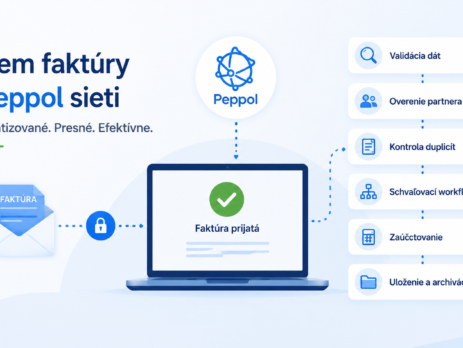
One way to overcome this is to bypass OCR altogether by using structured e-invoices. Even in countries without a national mandate, businesses can adopt the PEPPOL standard, which enables cross-border e-invoicing across Europe. Asking suppliers to send invoices via PEPPOL (or a local equivalent) ensures 100% digital accuracy. Some companies even discourage paper/PDF invoices financially, charging suppliers €20–50 per non-e-invoice. This quickly shifts behavior.
Remember, you are the buyer, and they are the supplier. You have the right to set the rules of engagement and choose suppliers that match your pace of digital adoption.
Where e-invoices are not possible, service providers who combine OCR with human verification can deliver better results, as these specialists focus only on checking extracted data and achieve much higher efficiency at a lower cost. And thanks to advancing technology, modern service providers can now reach nearly 100% accuracy — often better than an accountant whose attention is split between payroll, tax, and other tasks.
2. Supplier Diversity and Fragmented Inputs
Automation works best when inputs are standardized. But many suppliers still send invoices as PDFs, images, or even paper. Each format looks different, forcing OCR to interpret layouts instead of reading structured data. As long as supplier behavior is fragmented, full automation is difficul
Encouraging e-invoicing and onboarding suppliers onto structured channels solves the root cause. As a buyer, you can influence the pace—if one supplier cannot adapt, others will. This principle puts you in control of the digital maturity of your supply chain.
3. Legacy ERPs and Poor Integration
Many firms cling to old ERP systems that don’t support modern integrations. Data must be re-entered manually, negating automation benefits. Even when OCR extracts data, mapping it correctly into the ERP can be complex.
Thinking of your ERP as you would industrial machinery helps frame the decision: if it no longer supports efficient production, you replace it. The same logic applies here. If your ERP vendor cannot deliver integrations to external automation tools, pressure them—or switch providers. Market competition ensures that vendors who don’t modernize will lose customers.
Here again, you are the buyer. ERP vendors should serve your needs, not the other way around.
4. Complex Coding and Project-Based Expenses
Not every invoice is coded the same way each time. Expenses often vary by project, department, or cost object. Rules quickly become brittle, and machine learning suggestions can misclassify, which erodes trust.
To address this, modern invoice processing systems include approval workflows and purchase order (PO) matching.
Approval workflows allow project managers or department heads—those who know the context—to enter coding details directly on line items.
PO matching removes the need for re-coding altogether: if an item was approved in a PO, the system already knows how to code it. As the buyer, you control whether suppliers indicate on their invoices which purchase order the invoice belongs to, enabling automated PO matching.
By using purchase orders for ordering, you enable automation downstream and reduce manual coding work.
5. Human Resistance and Organizational Culture
Staff may resist automation due to habit, fear of job displacement, or lack of training. Managers sometimes underestimate the change management required.
This is ultimately a leadership decision. Efficient managers either free their bookkeepers for more meaningful tasks or accept inefficiency and keep hiring people for repetitive work.
As a manager, the decisions you make today determine how efficiently your employees work tomorrow—whether their time is consumed by repetitive manual entry or redirected to more valuable activities such as analysis, advice or client service.
6.Cost and ROI Concerns
Automation systems come with licensing fees and implementation costs. Smaller businesses often feel manual work is cheaper, especially at lower invoice volumes.
Yet salaries are rising while technology costs fall. A simple ROI exercise shows the math: if bookkeepers spend 60–80% of their time on tasks that could be automated, and automation tools cost as little as €10 per month, the business case is clear. Smart managers calculate long-term efficiency gains. Again, you are the buyer—not only of goods from suppliers, but also of systems and services. If one provider cannot offer cost-efficient automation, another one will.
7. Compliance and Audit Concerns
Accountants work in a regulated environment and need clear audit trails. Managers fear losing control or being unable to explain AI decisions, especially under audit.
Modern expense management software, also called as purchase-to-pay (P2P) tools address this by providing a full audit trail, logging every action. AI-based coding can be fine-tuned with confidence thresholds, so the system posts only when highly certain, while uncertain cases are flagged for review. The buyer–supplier principle applies here as well: choose technology vendors who can demonstrate compliance and transparency. If your current system cannot provide this, don’t hesitate to switch.
8. The Maturity Gap: Bridging Technology and Practice
Surveys show that 86% of bookkeeping tasks could be automated, yet fewer than half are. Technology exists, but processes, integrations, and human factors lag. Firms that embrace e-invoicing, demand ERP integrations, empower approvers, and calculate ROI objectively can close the gap today.
Automation is no longer futuristic—it is a managerial choice. The tools are ready, the costs are low, and the efficiency gains are proven. What holds companies back is not technology but the will to use it.
And remember: you are always the buyer. Whether dealing with suppliers, ERP vendors, or technology providers, you have the right to demand efficiency, modern standards, and integration. If one partner won’t meet your pace, another one will.
Related Posts

What Happens on the Recipient’s Side of the Peppol Network?

What is Peppol? The digital revolution in invoicing